
Hello all,
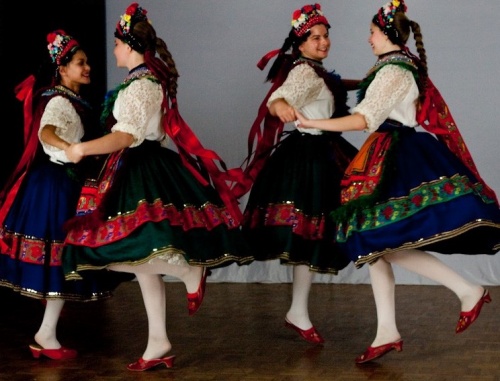
This is a photo of my friend Jennifer in her Sárköz costume. The region of Sárköz [pronounced sharkeuse] is well known in Hungary for its folk culture, and the costume is quite typical of a large portion of the country.
Sárköz is in south central Hungary, just west of the Danube, in Tolna county, part of the large region of Transdanubia, or Dunántúl.
This map shows the position of this region within Hungary. .
 It is in the southeastern part of Tolna County, consisting of the five settlements of Decs, Öcsény, Sárpilis, Alsónyék and Báta.

Sarkozi is the adjectival form, and is a common surname in Hungary, and is also the surname of the President of France, whose family, obviously, is Hungarian, and comes from this region.
In the early 19th cent. the wetlands in this region along the Danube were drained, greatly increasing the amount of arable land, which resulted in the peasants of this region becoming well off, which became evident in the local costume.

The chemise is quite full, the sleeves and body being smock-gathered into a neckband. It is traditionally of fine linen. The sleeves are rather short, the cuffs generally being worn above the elbow.
 The chemise was originally full length, and later, as in so many other places was cut in half, forming a blouse and underskirt.
The sleeves are made of two full widths of cloth. At first they were joined by decorative stitching, as you can see in the image above.
Sometimes the sleeves were embroidered, as in the following images. Notice that for this piece, the body is made of a cheap calico, and only the sleeves of fine linen.


Here is a closeup of three embroidery patterns which were used for the sleeves of the chemise. Unfortunately this image is not of the best quality.

Later, this stitching and embroidery was replaced by a length of lace inserted into the seam.

A skirt of linen up to 14 yards wide was worn over the chemise. This was densely smock-gathered. Over this were worn three or four white petticoats. Over that was worn a very full colored skirt of printed material or brocade. Commonly a wide patterned ribbon was sewn to the middle of the skirt, or a series of narrow ribbons on the edge, or both. The use of sequined trim is not uncommon. The hem often has a wide facing of a contrasting material. Over the last century the hem has slowly become shorter.Sometimes two skirts of colored cloth were worn.


Sometimes two colored skirts are worn, at other times a flounce may be added on top of the bottom of the skirt, sewn on just where the large ribbon is appliqued, about halfway down, to give the appearance of wearing two skirts.


Later the fashion changed to a type of blouse with a shoulder yoke and narrow sleeves, as you can see in this photo. This was rather widespread. These are often made of printed or damask material. Both types are seen today.

In colder weather, or for women of a certain age, a blouse or jacket is worn. This has long narrow sleeves, and generally has a high neck. This is a more urban style. This is sometimes considered to be more formal.


The apron is a simple rectangle gathered at the top. In the past it was made of a material which contrasted with the skirt, often silk or velvet. Today it is commonly made of the same material as the skirt. Rows of ornamental ribbon are sewn to the two sides and hem of the apron. The ribbons were sometimes ruched. The same three edges usually also have long silk fringe. I do not believe that aprons from any other region are fringed. Old women wear white linen aprons.


The collar of the chemise is sometimes a simple band, and sometimes is of black cloth with lace gathered into it.
Commonly a necklace of beads strung into a net is worn around the neck, as you can see here above.


Either boots, backless mules or shoes are worn. For everyday and less formal occasions, this completes the costume.


In cooler weather, or for more formal occasions a bodice is worn. This is quite simple, cut rather low in front, comes just to the waist and laces up the front. It may have simple trim ornament. Take another look at Jennifer at the head of the article, and other various images.


For dress, a rich shawl with fringe was worn over the shoulders, when such things became fashionable in the mid 1800's. As the peasants in this area became more affluent, as many as four shawls were worn on top of each other.


For formal occasions, starting when they became confirmed, girls wore a three part complex floral wreath on their heads, as one can see in the second image above, and in the following images. Ribbons may be attached behind.



The image above with the man shows a young married couple. Brides, or perhaps a better translation would be young wives, wore a special coif, fõkötõ. The floral wreath was not worn after the wedding. The special coif was worn for the first few years of marriage and was then put away. Here is an image of several unmarried girls and one young wife on the right.

These coifs were black with a very specific type of embroidery, not used in other regions, and used in Sárköz only for this one garment. These coifs are no longer commonly worn, but very many have been saved, and are regarded as part of the artistic heritage of this region.
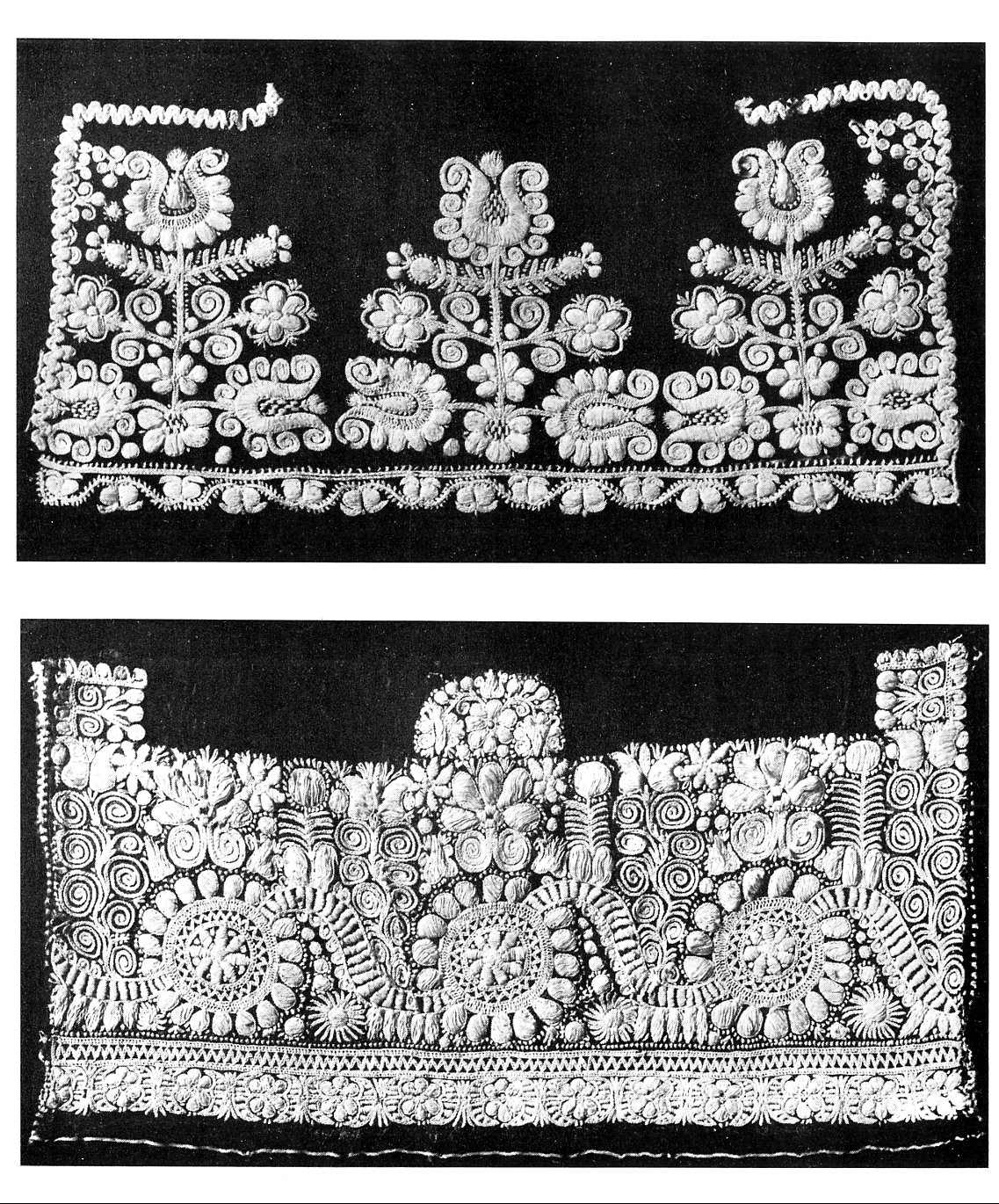
The embroidery is in white on a black background, and took the form of two bands, a wide one in front, and a narrow one behind. Sometimes the embroidery was arranged in three groups across the front. Colored ribbons were fastened behind.


It was formerly the custom in Transdanubia to wear a very thin linen veil over the cloth. This was a long narrow rectangle, similar to that which is still part of the folk costume of countries from Lithuania to Romania. This has currently ceased to be part of the Hungarian folk costume except in Kalatoszeg in Transylvania, and has even been picked up by the Saxons there. This veil was pinned to the coif with silver pins on each side.


Sarkozi is the adjectival form, and is a common surname in Hungary, and is also the surname of the President of France, whose family, obviously, is Hungarian, and comes from this region.
In the early 19th cent. the wetlands in this region along the Danube were drained, greatly increasing the amount of arable land, which resulted in the peasants of this region becoming well off, which became evident in the local costume.
The chemise is quite full, the sleeves and body being smock-gathered into a neckband. It is traditionally of fine linen. The sleeves are rather short, the cuffs generally being worn above the elbow.

The sleeves are made of two full widths of cloth. At first they were joined by decorative stitching, as you can see in the image above.
Sometimes the sleeves were embroidered, as in the following images. Notice that for this piece, the body is made of a cheap calico, and only the sleeves of fine linen.


Here is a closeup of three embroidery patterns which were used for the sleeves of the chemise. Unfortunately this image is not of the best quality.

Later, this stitching and embroidery was replaced by a length of lace inserted into the seam.

A skirt of linen up to 14 yards wide was worn over the chemise. This was densely smock-gathered. Over this were worn three or four white petticoats. Over that was worn a very full colored skirt of printed material or brocade. Commonly a wide patterned ribbon was sewn to the middle of the skirt, or a series of narrow ribbons on the edge, or both. The use of sequined trim is not uncommon. The hem often has a wide facing of a contrasting material. Over the last century the hem has slowly become shorter.Sometimes two skirts of colored cloth were worn.


Sometimes two colored skirts are worn, at other times a flounce may be added on top of the bottom of the skirt, sewn on just where the large ribbon is appliqued, about halfway down, to give the appearance of wearing two skirts.

Later the fashion changed to a type of blouse with a shoulder yoke and narrow sleeves, as you can see in this photo. This was rather widespread. These are often made of printed or damask material. Both types are seen today.
In colder weather, or for women of a certain age, a blouse or jacket is worn. This has long narrow sleeves, and generally has a high neck. This is a more urban style. This is sometimes considered to be more formal.

The apron is a simple rectangle gathered at the top. In the past it was made of a material which contrasted with the skirt, often silk or velvet. Today it is commonly made of the same material as the skirt. Rows of ornamental ribbon are sewn to the two sides and hem of the apron. The ribbons were sometimes ruched. The same three edges usually also have long silk fringe. I do not believe that aprons from any other region are fringed. Old women wear white linen aprons.


The collar of the chemise is sometimes a simple band, and sometimes is of black cloth with lace gathered into it.
Commonly a necklace of beads strung into a net is worn around the neck, as you can see here above.

Either boots, backless mules or shoes are worn. For everyday and less formal occasions, this completes the costume.

In cooler weather, or for more formal occasions a bodice is worn. This is quite simple, cut rather low in front, comes just to the waist and laces up the front. It may have simple trim ornament. Take another look at Jennifer at the head of the article, and other various images.


For dress, a rich shawl with fringe was worn over the shoulders, when such things became fashionable in the mid 1800's. As the peasants in this area became more affluent, as many as four shawls were worn on top of each other.
For formal occasions, starting when they became confirmed, girls wore a three part complex floral wreath on their heads, as one can see in the second image above, and in the following images. Ribbons may be attached behind.

The image above with the man shows a young married couple. Brides, or perhaps a better translation would be young wives, wore a special coif, fõkötõ. The floral wreath was not worn after the wedding. The special coif was worn for the first few years of marriage and was then put away. Here is an image of several unmarried girls and one young wife on the right.

These coifs were black with a very specific type of embroidery, not used in other regions, and used in Sárköz only for this one garment. These coifs are no longer commonly worn, but very many have been saved, and are regarded as part of the artistic heritage of this region.
The embroidery is in white on a black background, and took the form of two bands, a wide one in front, and a narrow one behind. Sometimes the embroidery was arranged in three groups across the front. Colored ribbons were fastened behind.


It was formerly the custom in Transdanubia to wear a very thin linen veil over the cloth. This was a long narrow rectangle, similar to that which is still part of the folk costume of countries from Lithuania to Romania. This has currently ceased to be part of the Hungarian folk costume except in Kalatoszeg in Transylvania, and has even been picked up by the Saxons there. This veil was pinned to the coif with silver pins on each side.
.This veil, called Bíbor, had ends which were embroidered in yet a different technique. This was done in sillk and metallic thread, originally in geometric designs. These ends were arranged so that they were displayed over the front of the bodice or jacket


These soon gave way to colorful curvilinear designs.


With the passing of the Bíbor as a living garment, This style of embroidery was reinvented and adapted for the embroidery of linens; handkerchiefs, tablecloths, napkins, dresser scarves, etc. This is as distinct a style as any in Hungary, if less well known than those of Kalocsa or the Matyó.


Linens were also produced using decorative weaving. The ornament on these linens was arranged in bands, most commonly red with some black touches, but also all in black. Pairs of birds facing each other is one of the most common motifs, as it is throughout the country. This was used for towels, pillowcases, tablecloths, etc.


Tablecloths made using this technique sometimes double as wraps.


Thus it is clear that Sárköz is a region of great richness in terms of folk art, embroidery and dress. I will close with a few more images.


Thank you for reading. I hope that you have found this to be interesting and informative. I would recommend trying any of these embroidery styles on projects in your own life. This is part of the richness of the artistic heritage of the world, and should continue to beautify our lives.
Roman K.
email: rkozakand@aol.com
Source Material:
Gyula Ortutay, 'Kleine Ungarische Volkskunde', Budapest, 1963
György Martin, 'Hungarian Folk Dances', New York, 1988
Alice GAboryan, 'Hungarian Folk Costumes', Budapest, 1988
Tamas Hofer, 'Hungarian Peasant Art', Budapest, 1969
Karoly Gink, 'Folk Art and Folk Artists in Hungary', Budapest, 1968
Lengyel György, 'Nagyanyaink Öröksége', Budapest, 1986Lengyel György, 'Népi Kézimunkák', Budapest, 1978


